

Cold storage is more than a buzzword. For anyone holding crypto beyond pocket-change, losing access to private keys is terrifying — and common. A backup card offers a tangible, durable way to safeguard seed phrases or encrypted private keys without keeping them online. Simple, right? Not exactly. There are trade-offs, implementation quirks, and human habits that sabotage the best-laid plans. This piece walks through what backup cards do, how they fit into cold storage strategies, where they excel, and where they can fail — plus real-world tips to make them work for you.
Think of a backup card as insurance. It’s not glamorous. It doesn’t earn yield. But it can save you from total loss. If you’re someone who stores crypto on hardware wallets, custodial platforms, or even software wallets, a backup card offers an extra layer that’s offline, physical, and portable. And yes, that portability introduces its own risks — theft, fire, water damage, curiosity from relatives — so placement and redundancy matter.
What a Backup Card Actually Is
At its core, a backup card is a physical medium that stores backup data for your crypto keys. That can be a printed seed phrase on a durable metal card, an engraved private key, or a smart-card-style device that stores encrypted seed data and requires a PIN to access. Each approach balances accessibility, security, and durability differently. Metal engravings resist heat and water. Smart cards can enforce PINs and rate-limit attempts. Paper is cheap but fragile.
Here’s the trade-off in plain terms: you want something offline and resilient, but you also want it recoverable by you (or trusted parties) when needed. That dual requirement often leads people to combine methods — a hardware wallet for daily use, plus two backup cards in separate locations for disaster recovery.
Common Backup Card Types and When to Use Them
Not all backup cards are created equal. There are three common categories:
– Engraved metal plates: durable, tamper-resistant, survives most household disasters. Good for long-term storage when you can keep it secret and safe.
– Laminated/printed cards: cheap and portable, but vulnerable to water and fire. Use only as a short-term or emergency backup.
– Smart-card backups: these are more advanced; they store encrypted key material and often require a PIN or cryptographic challenge to release keys.
Smart-card backups strike a useful compromise when paired with a hardware wallet. For instance, certain ease-of-use hardware solutions let you store a recovery snapshot on a smart card that you keep in a safe deposit box — accessible when needed, but otherwise offline and protected.
How Backup Cards Fit into Cold Storage Strategy
Cold storage is any method keeping private keys offline. You can have paper wallets, air-gapped devices, hardware wallets, or multi-sig setups. Backup cards plug in as recovery tools — not as your primary spending method. They’re the difference between a recoverable loss and an irreversible one.
Two practical patterns work well:
1) Single-owner redundancy: keep your hardware wallet, plus two backup cards stored separately (home safe + bank safe deposit box). That guards against both device failure and a single-location disaster.
2) Shared access (trusted executor): if you want a trusted person to recover assets after incapacity, use split-seed techniques or multi-signature wallets so no single backup reveals the whole key. Cards can store shares that only reconstruct keys when combined.
Security Considerations — Threats and Mitigations
There are two axes to think about: physical threats and revelation risks. Physically destroying or stealing a card is one risk. Someone reading the seed is another. Encryption helps: if your backup card requires a PIN or stores only encrypted data, a thief gains nothing without the PIN. But if the PIN is weak or stored nearby, the protection is moot.
Don’t fall for the convenience trap. Storing a written seed in a wallet box next to your phone is asking for trouble. And shipping a backup card via regular mail to an offshore vault without encryption — also risky. Protect the seed with a passphrase where possible, and consider schemes like BIP-39 passphrase (also called 25th-word) which materially increases resistance to compromise.
Practical Steps to Implement a Robust Backup Card System
Here’s a simple workflow to follow if you want real resilience:
1. Generate your seed on an air-gapped device or reputable hardware wallet. Never generate seeds on an internet-connected machine.
2. Choose your backup card type. For most people, a durable metal backup for the seed plus a smart-card snapshot of an encrypted key is a strong combo.
3. Apply a passphrase. Even a memorable passphrase strengthens the seed dramatically (but also means you must never forget it).
4. Store in multiple geographically separated locations. Two locations is a baseline; three is better for serious holdings.
5. Test recovery. This is crucial — create a wallet from your backup card in a controlled test to confirm the process works. If you can’t recover from your backups, they’re worthless.
Real-World Tools and a Practical Recommendation
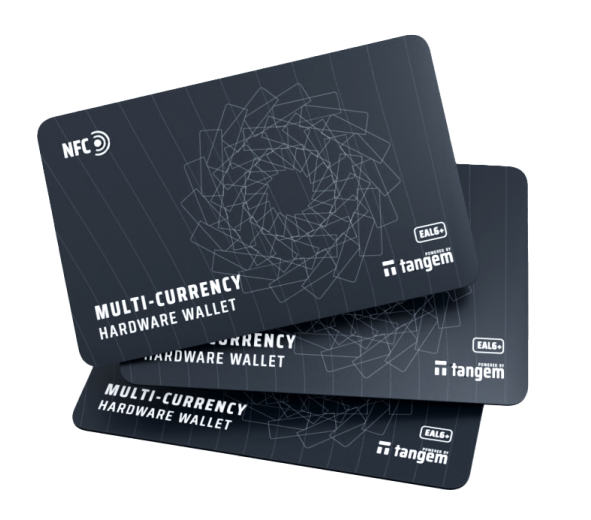
If you prefer a smart-card approach because you want PIN protection, modern options integrate well with hardware wallets and ecosystems. For a compact, secure smart-card option that many find intuitive, see the tangem hardware wallet — it’s worth evaluating alongside other hardware solutions when you want a card-like form factor for cold backups. A single, well-designed smart card can simplify secure storage while keeping keys offline.
Whatever tool you choose, remember: security is people-dependent. A flawless backup stored in an unlocked glovebox is as good as lost. Treat backup cards like critical documents — not gadgets. Put them in a safe, rotate checks every year, and document recovery steps for trusted parties (without revealing secrets).
FAQ
Q: Can a backup card replace a hardware wallet?
A: No. Backup cards are recovery mechanisms. Hardware wallets remain the best practice for day-to-day key custody and transaction signing. Think of cards as the spare tire in the trunk.
Q: How many backup cards should I have?
A: At minimum two, kept in separate secure locations. For high-value holdings, use three or combine backup cards with geographically-distributed multi-sig schemes.
Q: Is engraving on metal really necessary?
A: Not always, but for long-term storage it’s wise. Metal resists household fires and moisture; paper does not. If you choose paper, store it in a waterproof, fire-resistant container and treat it as temporary.